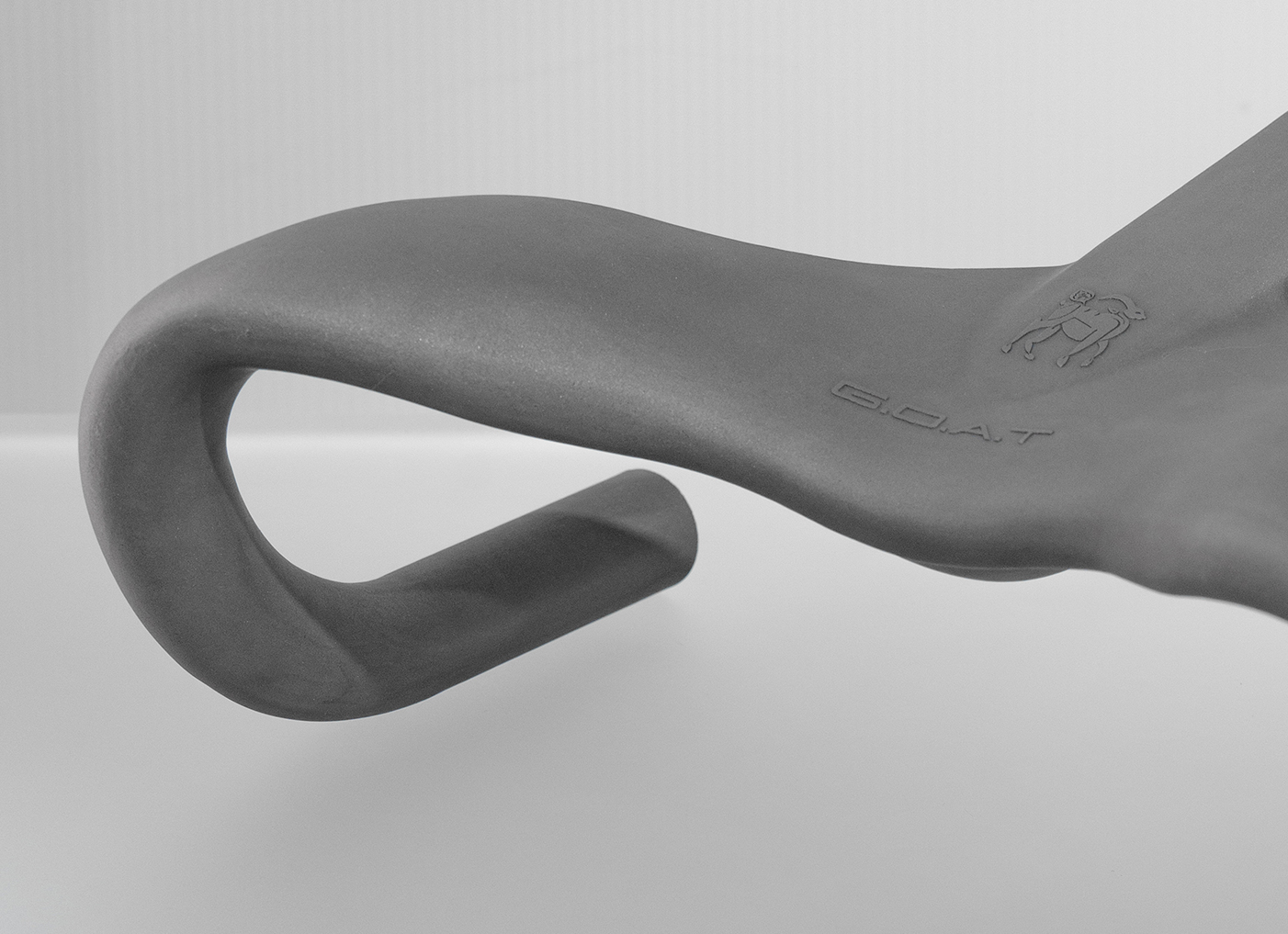

Automotive
Titanium Exhaust System: A Bespoke Commission for a Track-Day Porsche
When a Porsche 911 GT3 owner approached G.O.A.T with a singular demand — a fully bespoke titanium exhaust system that was lighter, louder, and unlike anything available off the shelf — we said yes. This is the story of that build.
There are commissions that arrive as a brief, and then there are commissions that arrive as a challenge. When the owner of a 2023 Porsche 911 GT3 contacted us, he did not want a catalogue part. He wanted something that had never existed before — a full titanium exhaust system, designed from scratch, optimised for track use, and finished to the same standard as the car itself.
We said yes.
The Brief
The client's requirements were precise: reduce total exhaust weight by at least 40% compared to the factory stainless system, improve mid-range torque response, and produce a sound profile that was unmistakably raw without crossing into illegality on public roads. The system would need to survive sustained track sessions at Spa-Francorchamps and Nürburgring Nordschleife — two of the most thermally demanding circuits in the world.
Standard exhaust fabrication would have been impossible here. The geometry of the GT3's rear-engine layout, combined with the client's desire for a merged collector design, required tolerances that no hand-bent tube could achieve consistently. This was a job for additive manufacturing.
Material Selection: Grade 5 Titanium
We specified Grade 5 titanium (Ti-6Al-4V) for the primary components — the collector, the mid-section, and the twin-exit tips. Grade 5 offers an exceptional strength-to-weight ratio, outstanding corrosion resistance, and critically, the ability to withstand continuous operating temperatures above 600°C without oxidation or creep deformation.
The wall thickness across the collector was held to 0.8mm — a figure that would be structurally impossible in conventional fabrication but is entirely achievable through selective laser melting. At this thickness, the titanium develops its characteristic heat-blued iridescence during operation, shifting from silver to gold to deep violet as the system cycles through temperature ranges. The client had specifically requested this visual effect. We delivered it as a function of physics, not a cosmetic treatment.
"The wall thickness across the collector was held to 0.8mm — a figure that would be structurally impossible in conventional fabrication."
The Design Process
Our engineers spent three weeks in computational fluid dynamics modelling before a single gram of titanium powder was loaded into the printer. The collector geometry — a four-into-one design with equal-length primaries — was iterated through eleven versions before we achieved the target scavenging efficiency. Each iteration was simulated at 8,500 rpm under full load, the conditions the GT3 engine sustains on a flying lap of the Nordschleife.
The mid-section incorporates an internal lattice structure — a G.O.A.T signature — that adds structural rigidity without adding mass. The lattice is invisible from the outside, hidden within the double-wall construction, but it is the reason the system can absorb the vibration harmonics of a flat-six at full song without fatigue cracking over a race season.

Print, Post-Process, Fit
The collector and mid-section were printed as single monolithic pieces — no welds, no joints, no potential failure points. Print time for the collector alone was 31 hours. After printing, each component underwent hot isostatic pressing to eliminate any residual porosity in the titanium matrix, followed by CNC finishing of all mating surfaces to a tolerance of ±0.05mm.
Fitment to the car took one day. The system dropped into place with the precision of a factory part — because it was designed with the same precision as a factory part, only better. The final weight saving was 43% against the OEM system. The client had asked for 40%.
On Track
The car completed its first full test day at Circuit de Catalunya three weeks after delivery. The client's feedback was unambiguous: the mid-range response was transformed, the sound was exactly what he had described in the brief, and the system had survived six hours of hard running without a single issue.
The heat bluing had progressed exactly as predicted — the collector now wears a deep amber-to-violet gradient that is visible through the engine bay. It is, in the client's words, "the most beautiful mechanical object I own."
We are inclined to agree.
Commission Your Own
Every G.O.A.T bespoke commission begins with a conversation. If you have a project — automotive, architectural, or otherwise — that demands precision beyond what conventional manufacturing can offer, we would like to hear from you.
bespoke.relatedLabel